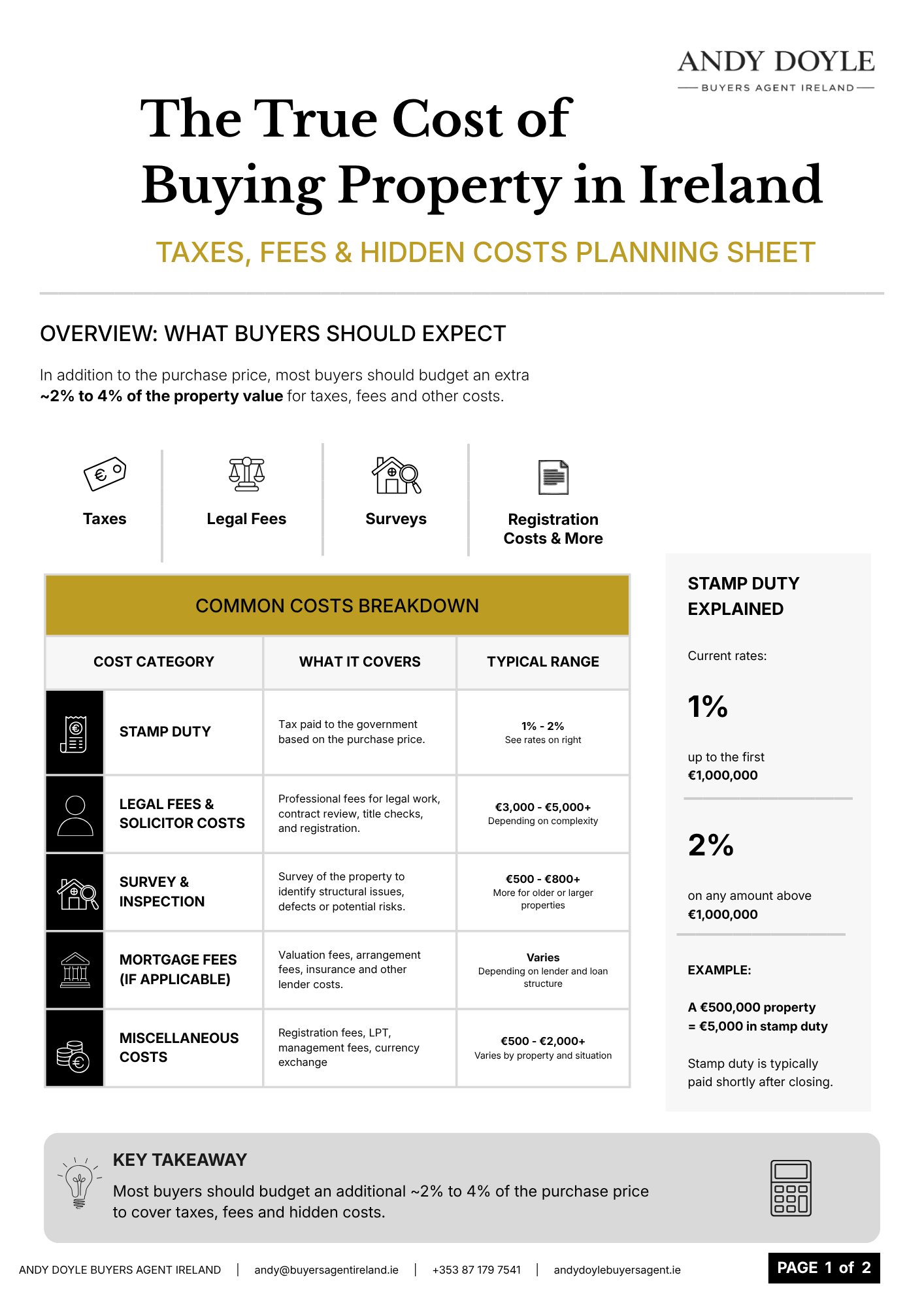
The True Cost of Buying Property in Ireland
One of the most common questions we hear from U.S. buyers is:
"How much does it actually cost to buy property in Ireland?"
While the purchase price is the biggest expense, there are several additional costs that buyers need to budget for. Understanding these costs upfront can help you avoid surprises and make more informed decisions throughout the buying process.
In this guide, we'll break down the true cost of buying property in Ireland, including taxes, legal fees, surveys, and some of the hidden costs that many international buyers don't expect.

Grattan Bridge in Dublin, Ireland
Overview: What Buyers Should Expect
In addition to the purchase price, most buyers should budget an additional:
Approximately 2%–4% of the property value
This may include:
Stamp duty
Legal fees
Property surveys
Registration costs
Currency exchange costs
Mortgage-related expenses (if financing)
The exact amount will depend on:
Property value
Whether you're purchasing with cash or financing
The complexity of the transaction
Whether you engage specialist advisors during the process
Stamp Duty Explained
Stamp duty is the primary tax payable when purchasing residential property in Ireland.
Current Residential Stamp Duty Rates
1% on the first €1,000,000
2% on any amount above €1,000,000
Example
A €500,000 property would incur:
€5,000 in stamp duty
Your solicitor typically handles the payment of stamp duty after completion of the purchase and before registration of ownership.
Legal Fees and Solicitor Costs
A solicitor is required to handle the legal aspects of your property purchase.
Their responsibilities typically include:
Reviewing contracts
Conducting title investigations
Performing legal due diligence
Handling the transfer of ownership
Registering the property in your name
Typical Costs
Expect solicitor fees and related outlays to range from approximately:
€3,000–€5,000+
depending on the complexity of the transaction.
It's important to note that professional fees are generally subject to VAT, which increases the overall cost.
Choosing an experienced solicitor is critical, as delays often occur during the legal process.
Survey and Inspection Costs
Before committing to a purchase, it's strongly recommended to obtain an independent property survey.
A survey can identify:
Structural issues
Damp or water damage
Defects and maintenance concerns
Potential future repair costs
Typical Cost
€500–€800+
For older properties, rural homes, or period properties, a survey is particularly important and can save significant expense later.
Property Registration Fees
Once the purchase is complete, ownership must be registered with the Property Registration Authority (PRA).
Registration fees vary depending on the transaction but can add several hundred euro to the overall purchase cost.
Your solicitor will normally arrange this as part of the conveyancing process.
Mortgage Fees (if applicable)
If you're financing the purchase with a mortgage, additional costs may include:
Property valuation fees
Mortgage arrangement fees
Insurance requirements
Lenders require insurance to be in place before mortgage funds are released.
These costs vary depending on the lender and mortgage structure.
Currency Exchange Costs for U.S. Buyers
This is one of the most commonly overlooked costs for international buyers.
When transferring funds from US dollars into euro, exchange rate fluctuations can significantly impact the total amount you pay.
For example, even a small difference in exchange rates on a €600,000 purchase could result in several thousand euro in additional costs.
Many international buyers choose to work with specialist foreign exchange providers rather than relying solely on traditional bank transfers.
Disclosure: We have a referral relationship with Currencies Direct and can introduce clients to a dedicated currency specialist. However, buyers should always compare exchange rates, fees, and services from multiple providers to determine what best suits their needs.
Hidden Costs Buyers Miss
In addition to the major expenses above, buyers should also consider:
Local Property Tax (LPT)
Apartment management fees
While each individual cost may seem modest, together they can have a meaningful impact on your overall budget.
Do Foreign Buyers Pay Additional Taxes?
In most cases, non-resident buyers pay the same stamp duty and transaction costs as Irish residents when purchasing residential property in Ireland.
However, tax implications can differ if the property is being purchased as:
An investment property
A rental property
Part of a company structure
Because every situation is different, international buyers should seek professional tax advice before completing a purchase.
Should You Budget for a Buyer's Agent?
Some buyers choose to work with a dedicated buyer's agent to assist with:
Property search
Market analysis
Property viewings
Negotiation
Due diligence
Coordination with solicitors, surveyors, and lenders
Buyer-agent fees vary depending on the level of service provided, the type of property search, and the complexity of the transaction. Fee structures can also differ between firms, with some charging an upfront engagement fee, others using milestone-based payments during the purchase process, and some collecting the majority of their fee upon successful completion. Buyers should discuss fees, payment schedules, and the scope of services upfront as part of their overall acquisition budget.
For many overseas buyers, professional representation can help save time, reduce risk, and provide local market expertise throughout the process.
Example: Total Cost on a €600,000 Property
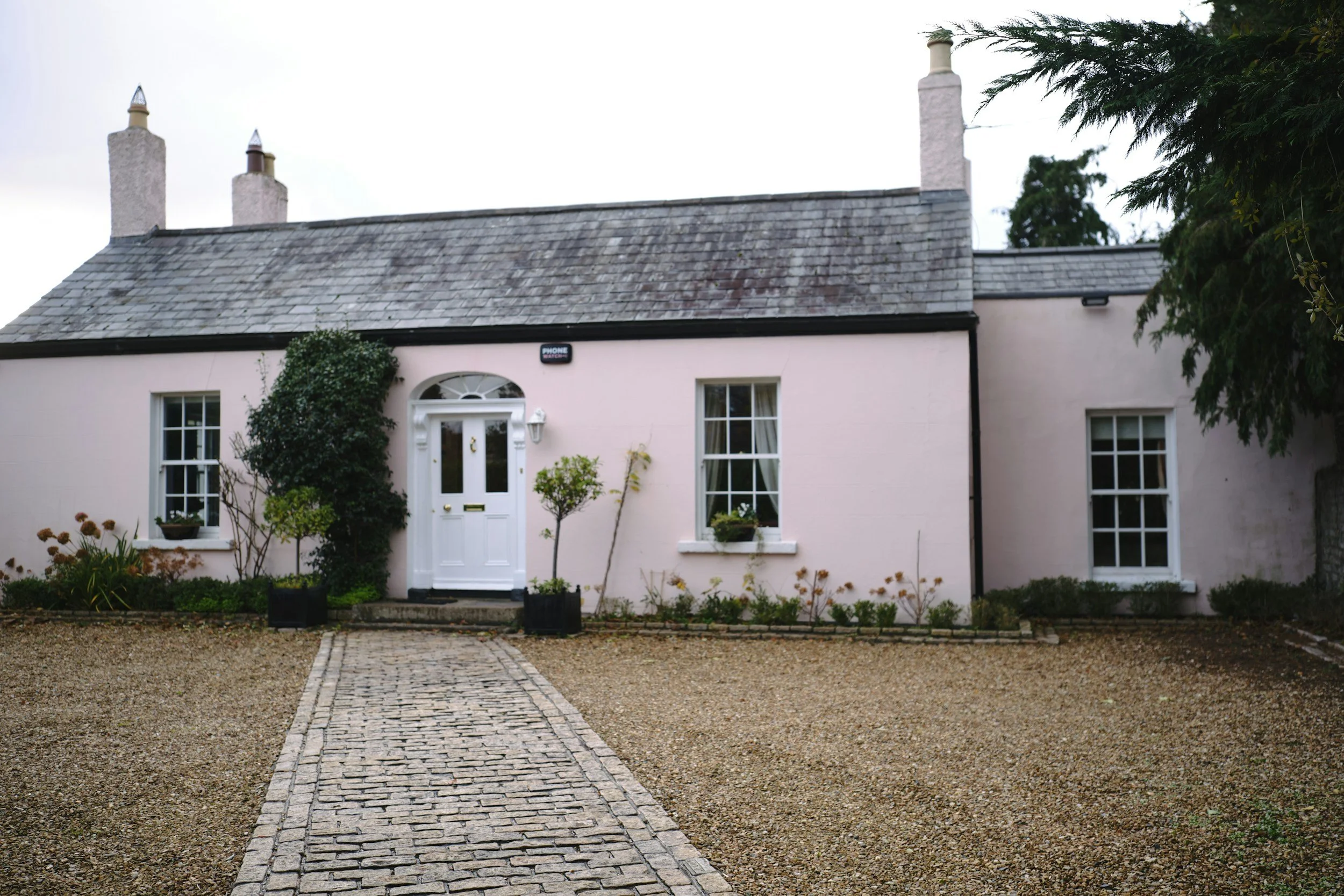
Here’s a simplified example:
Cost Estimated Amount
Stamp Duty €6,000
Legal Fees & Outlays €3,500
Survey (Inspection) €500
Mortgage Fees €1,000
Miscellaneous Costs €3,000
Estimated Additional Costs:
€14,000
This estimate excludes any buyer agent fees.
Planning Your Next Steps
Understanding the costs involved is just one part of buying property in Ireland.
You may also find these guides helpful:
If you are interested in how to budget for your daily life in Ireland prior to your move, check out our personal moving checklist. You can request it through our post: From the U.S. to Ireland: Our Journey
Final Thoughts
Buying property in Ireland is a relatively straightforward process when you understand the costs involved and plan appropriately.
The key is to:
Understand all costs upfront
Budget realistically
Seek professional advice when needed
Work with trusted professionals throughout the transaction
Proper preparation helps avoid surprises and keeps your purchase on track.
Thinking About Buying Property in Ireland?
Whether you're relocating, purchasing a second home, or investing in Irish property, having experienced local guidance can make the process significantly smoother.
At Andy Doyle Buyers Agent Ireland, we help international buyers navigate the Irish property market from initial search through to successful completion.
Get in touch to start your property journey with clarity and confidence.